
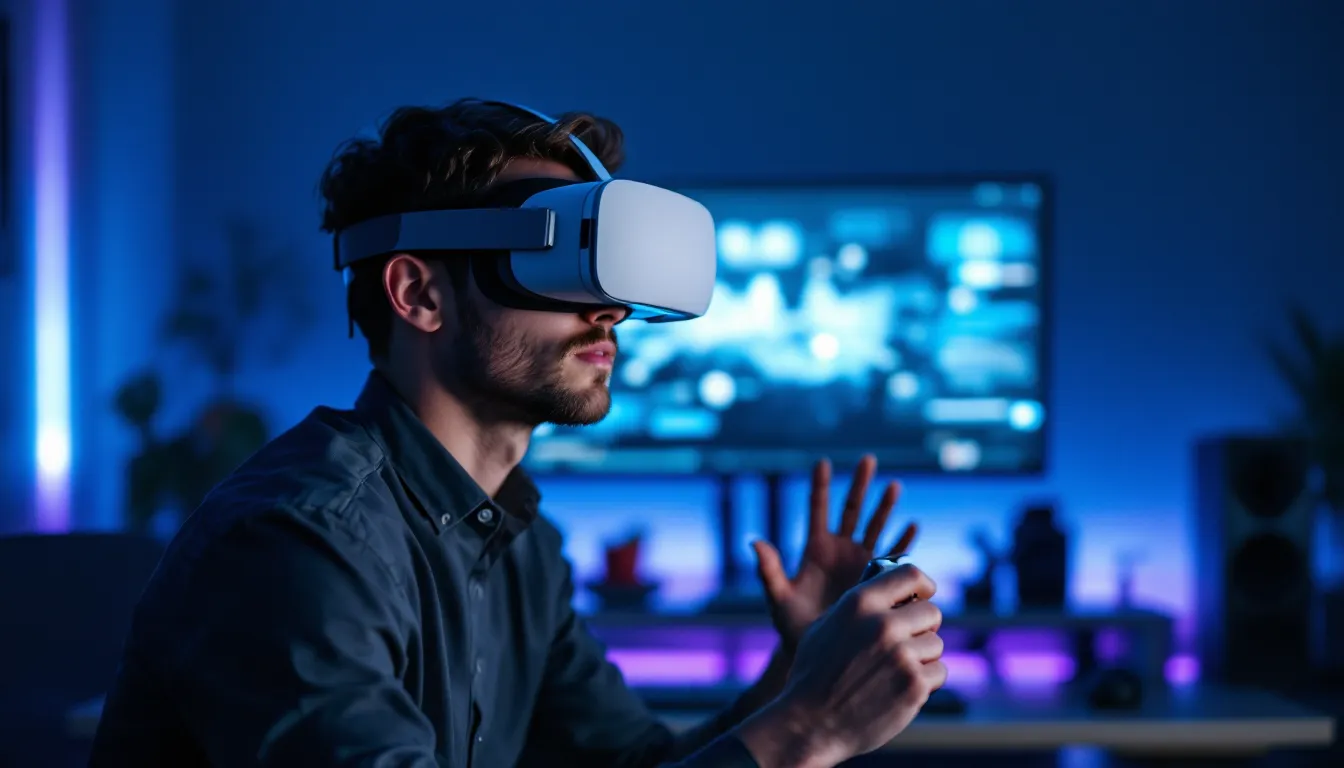
VR horror hits different. There’s no screen to hide behind, no pause button that really saves you when something’s breathing down your neck in 360 degrees. And if you’re hunting for scares on a budget, you’re in luck, the Meta Quest ecosystem has evolved into a surprisingly deep well of free horror experiences that’ll make you question why you ever wanted to try VR in the first place.
Whether you’re rocking a Quest 2, Quest 3, or the newer Quest 3S released in late 2025, there’s a growing library of no-cost nightmare fuel waiting to test your courage. From official demos of acclaimed titles to indie experiments that push atmospheric dread to the limit, free doesn’t mean forgettable. Some of these experiences rival paid titles in pure terror-per-minute, and a few have become cult favorites in the VR horror community.
This guide breaks down the best free Oculus horror games available right now, where to find them, and how to squeeze every drop of dread out of your headset without spending a dime.
Key Takeaways
- Free Oculus horror games deliver immersive scares comparable to paid titles, with the Meta Quest Store, App Lab, and SideQuest offering demos and indie experiments at no cost.
- VR horror eliminates the emotional distance of traditional games by creating genuine presence—your brain processes threats as real, making even short experiences more memorable than lengthy flatscreen horror games.
- Top free Oculus horror games like Propagation VR, Face Your Fears 2, and The Exorcist: Legion VR provide varied experiences ranging from combat-focused scares to narrative-driven investigations.
- Optimize comfort settings, play in darkness with quality headphones, and use the Guardian system generously to prevent motion sickness and ensure safe, immersive gameplay.
- Free horror experiences typically offer 15-45 minutes of content with lower visual polish than paid titles, but clever game design and atmospheric elements often compensate for production budget differences.
- Monitor seasonal promotions and SideQuest updates regularly, as new free horror releases and limited-time offers launch frequently throughout the year.
Why VR Horror Games Are the Ultimate Thrill Experience
Traditional horror games let players maintain emotional distance. You’re watching a character on a screen, controlling them with a gamepad while sitting safely on your couch. VR eliminates that buffer entirely.
When you’re inside a VR horror game, your brain processes the environment as real space. That shambling figure in the hallway isn’t approaching your character, it’s approaching you. The sense of presence transforms jump scares from cheap tricks into genuine fight-or-flight triggers. Your body doesn’t know the difference between a virtual zombie lunging at your face and an actual threat.
The immersion extends beyond visuals. Spatial audio in modern headsets like the Quest 3 creates directional sound cues that make you spin around to check what’s creaking behind you. Hand tracking and controllers turn your actual movements into in-game actions, so when you’re fumbling to reload a flare gun while something growls in the darkness, your shaking hands are really shaking.
This psychological intensity is why even short VR horror experiences stick with players longer than 40-hour flatscreen horror games. Twenty minutes in a well-designed VR haunted house can be more memorable than an entire traditional horror campaign. It’s not just about seeing horror, it’s about being trapped inside it.
How to Find Free Horror Games for Your Oculus Headset
Using the Meta Quest Store
The official Meta Quest Store is the first stop for free horror content. Open the store on your headset or through the Meta Quest mobile app, then filter by price, select “Free” under the pricing options. The store categorizes demos separately from full free-to-play titles, but both can deliver solid scares.
Most free offerings are either demos of paid games or episodic titles where the first chapter is free. The store’s “Demos” section gets updated regularly, and seasonal events (especially around Halloween) tend to bring temporary free access to premium horror titles. Bookmark games on your wishlist to get notifications when they go free or drop in price.
The search function isn’t perfect, so browsing the “Horror” genre tag while filtering for free content works better than keyword searches. User reviews help distinguish between quick cash-grabs and genuinely worthwhile experiences.
Exploring SideQuest and Alternative Platforms
SideQuest has become the unofficial app store for Quest headsets, hosting hundreds of indie VR projects including some genuinely disturbing horror experiments. You’ll need to enable Developer Mode on your Quest (a free process through the Meta Developer account) and sideload the SideQuest app.
The platform’s curation is less strict than the official store, which means quality varies wildly, but it’s also where innovative indie devs test concepts that might never pass Meta’s submission process. The horror section includes everything from polished demos to rough but conceptually brilliant psychological horror experiments.
Itch.io also hosts VR-compatible games, though finding Quest-native titles requires filtering carefully. App Lab, Meta’s middle-ground platform, sits between the official store and SideQuest, it’s accessible through the Quest store but doesn’t require sideloading, making it easier to try experimental titles that aren’t fully published yet.
Free-to-Play Demos and Limited-Time Offers
Game demos have made a comeback in the VR space. Developers use them to build hype for full releases, and some demos are substantial enough to feel like complete short experiences. Propagation VR, Cosmodread, and The Walking Dead: Saints & Sinners have all offered generous demo versions.
Meta runs periodic promotions where premium games become temporarily free, these usually coincide with hardware launches or seasonal events. Following VR-focused communities on Reddit (r/OculusQuest) or Discord servers dedicated to Quest gaming helps catch these deals before they expire.
Some developers release “Chapter 1” of episodic horror games as permanent free content, banking on players purchasing later chapters. This model has produced some excellent free standalone experiences that don’t feel like incomplete teasers.
Top Free Oculus Horror Games You Can Play Right Now
Propagation VR (Free Demo)
Propagation VR delivers tight, wave-based zombie horror in a confined subway setting. The free demo, available through the Meta Quest Store and App Lab, showcases the full game’s core mechanics across two intense scenarios.
What makes it stand out is the weapon handling, reloading pistols and shotguns while zombies sprint toward you creates panic that feels earned rather than scripted. The limited ammo and enclosed spaces force resource management decisions in real-time. According to gaming news coverage, the full version expanded significantly after the demo’s positive reception, but the free content remains a masterclass in VR combat horror.
Graphics are sharp on Quest 3, with detailed zombie models that look genuinely grotesque up close. The demo runs about 15-20 minutes but supports replay for leaderboard scores. It’s an excellent test for whether you can handle VR gore and intense action without motion sickness.
Face Your Fears 2
Face Your Fears 2 went fully free-to-play in late 2024, making it one of the most accessible horror anthologies on Quest. It packages multiple horror scenarios, possessed dolls, alien abductions, haunted hospitals, into bite-sized chapters with varied gameplay.
Each chapter takes 10-15 minutes and focuses on different horror subgenres. The hospital level leans into psychological dread and exploration, while the home invasion scenario amps up tension through sound design and pacing. Quality varies between chapters, but the variety means most players will find at least two or three genuinely unsettling experiences.
The free model includes occasional ads between chapters, which kills immersion but is a reasonable trade-off for the amount of content. Visually, it’s starting to show its age compared to 2025-2026 releases, but the core scares still land. It’s particularly good for newcomers testing their tolerance for VR horror without commitment.
Affected: The Manor (Demo Version)
The Affected: The Manor demo has been a VR horror staple since the early Quest days. It’s a straightforward haunted mansion walk-through, no combat, no puzzles, just pure atmospheric dread and expertly timed jump scares.
What makes it effective is the production quality. Environmental audio creates constant low-level anxiety through creaking floorboards, distant whispers, and the occasional slamming door. The path through the manor is linear, but lighting and spatial design make you feel genuinely lost. Jump scares are frequent enough to keep tension high without becoming predictable.
The demo typically offers one or two full walk-throughs of different manor variants. It’s short (about 10 minutes per run), but it’s become a go-to introduction for showing non-gamers what VR horror can do. The full paid version adds more environments and randomization, but the demo delivers the core experience.
The Exorcist: Legion VR (Free Chapters)
The Exorcist: Legion VR made its first chapter permanently free, offering a complete story arc set in the film franchise’s universe. You’re investigating paranormal disturbances across five chapters (only the first is free), using religious artifacts and detective work to uncover supernatural threats.
The free chapter takes place in a domestic home with demonic activity. It’s slower-paced than other entries on this list, prioritizing investigation and atmosphere over constant scares. The Exorcist license brings strong production values, voice acting, environmental storytelling, and religious iconography are all treated seriously.
Gameplay involves examining objects, performing rituals, and surviving supernatural encounters. The chapter runs 45-60 minutes, making it one of the meatier free horror experiences available. It requires patience, there’s significant walking and object interaction, but the payoff during the final confrontation justifies the buildup. Players interested in narrative-driven horror rather than action will appreciate the pacing.
Dreadhalls Demo Experience
The Dreadhalls demo represents old-school VR horror: procedurally generated dungeon crawling with limited resources and permadeath tension. You’re trapped in dark catacombs with only a flickering lantern, searching for an exit while monsters hunt you.
The procedural generation means each run feels different, though asset repetition becomes noticeable after multiple attempts. The demo typically limits depth, you won’t reach the deepest dungeon levels, but it communicates the core loop effectively. Light management is the primary mechanic: your lantern oil depletes constantly, forcing you to choose between navigating in darkness or depleting resources.
Monster encounters are deliberately unfair. You can’t fight back, only run and hide. The audio design does heavy lifting here, you’ll hear creatures before seeing them, and learning to distinguish enemy types by sound becomes critical. It’s brutally difficult and intentionally frustrating, which won’t appeal to everyone, but it nails the helpless horror vibe.
Free Horror Experiences on SideQuest
Realistic Jumpscares and Atmospheric Titles
SideQuest’s horror library skews toward experimental projects that test specific fear mechanics. Titles like The House of Terror and Paranormal VR focus almost exclusively on jump scares, stripping away gameplay to deliver pure shock value. These aren’t sophisticated experiences, but they’re effective if you’re just looking to test your nerves.
More atmospheric entries like Fogborn and The Forgotten Room prioritize environmental storytelling and gradual tension building. These games often lack traditional objectives, you’re exploring abandoned spaces, piecing together what happened through environmental clues. Polish varies dramatically: some feel like student projects while others demonstrate genuine artistic vision.
The advantage of SideQuest horror is the willingness to experiment with uncomfortable themes and mechanics that wouldn’t pass official store guidelines. Developers push boundaries with disturbing imagery, unconventional controls, and narrative approaches that major publishers avoid. Quality control is the trade-off, so expect to download several duds before finding hidden gems.
Indie Developer Horror Experiments
Indie VR horror on SideQuest often serves as proof-of-concept for unique mechanics. One developer might test reactive AI that adapts to player behavior: another might experiment with non-Euclidean geometry to disorient players. Petrified, a SideQuest favorite from 2024-2025, built entire gameplay around holding perfectly still to avoid detection, a mechanic that wouldn’t work outside VR.
These experiments rarely offer more than 20-30 minutes of content, but they showcase innovation that larger studios can’t risk. Community feedback loops are tighter too: developers update based on player reports and suggestions posted directly in SideQuest comments. Some of the best concepts eventually graduate to full releases on the official store, but many remain SideQuest exclusives.
For players willing to tolerate rough edges, SideQuest’s indie horror section offers experiences you literally can’t get anywhere else. Just manage expectations, “free indie experiment” means exactly that, not “free AAA game.”
Tips for Maximizing Your Free VR Horror Experience
Optimizing Comfort Settings to Prevent Motion Sickness
VR horror games tend to ignore comfort settings in favor of immersion, which can wreck players prone to motion sickness. Before launching any horror title, check the comfort options menu, many offer snap turning instead of smooth rotation, vignette effects during movement, and teleport locomotion as alternatives to smooth walking.
Start with maximum comfort settings even if you think you don’t need them. Horror games trigger motion sickness faster than other genres because they deliberately disorient you. Once you’ve acclimated to a specific game, you can gradually reduce comfort features.
Take breaks at the first sign of nausea. The “push through it” approach makes symptoms worse and can create lasting VR aversion. Even experienced VR users should limit horror sessions to 30-45 minutes initially. Keep a fan pointed at you while playing, airflow helps reduce nausea and adds tactile feedback that oddly enhances immersion.
Creating the Perfect Immersive Environment
Play in complete darkness if possible. Your brain’s peripheral vision picks up real-world light even through the headset’s gaps, which breaks immersion at critical moments. Blackout curtains or night sessions maximize presence.
Clear your play space thoroughly. Horror games make you move unpredictably, backing away from threats, spinning to check behind you, dropping into defensive crouches. You need more room than you think. Use the Guardian system aggressively: set boundaries with extra buffer space. Many walkthroughs and gaming guides recommend at least 6.5 x 6.5 feet for standing horror experiences.
Remove reflective surfaces from your play area if you’re using a Quest 3 or 3S with color passthrough. Seeing your actual room bleed through during scary moments completely kills the effect. Mirrors, TV screens, and glossy furniture can all trigger unwanted passthrough activations.
Using Headphones for Enhanced Audio Terror
The Quest’s built-in audio is adequate for casual games but insufficient for horror. VR horror relies on spatial audio cues, directional footsteps, breathing, and environmental sounds that position threats in 3D space. Quality headphones make these cues dramatically more effective.
Wired headphones eliminate battery concerns and audio lag. The Quest 3 and 3S support USB-C audio, while Quest 2 requires the 3.5mm jack. Over-ear headphones provide better isolation than earbuds, completely blocking external sound that might remind you you’re safe.
Adjust audio levels carefully. Horror games master their sound for headphones with the expectation that you’ll hear quiet details. If you’re cranking volume to hear whispers, you’ll get blasted when scripted loud events trigger. Many players prefer setting system volume around 70-75% and adjusting in-game audio from there.
What to Expect From Free vs. Paid Horror Games
Content Length and Replay Value
Free horror experiences typically deliver 15-45 minutes of content compared to 4-8 hours for mid-tier paid titles and 10+ hours for premium releases. Demos are designed to showcase mechanics and atmosphere without revealing full narratives, so expect cliffhangers and incomplete story arcs.
Replay value varies dramatically. Linear experiences like Affected: The Manor offer minimal reason to return once you’ve seen all the scares. Games with procedural generation (Dreadhalls) or multiple endings extend replay value significantly. Score-based games like Propagation VR encourage replays for leaderboard competition.
Free-to-play titles with episodic structures often gate later content behind paywalls. The first chapter might be polished and substantial, but subsequent purchases are required to see the story through. This model works if you view the free content as a trial, but it can feel incomplete if you’re hoping for a full narrative arc.
Graphics Quality and Polish Differences
Budget constraints show most obviously in visual fidelity and environmental detail. Paid horror games from established studios feature motion-captured animations, photogrammetry environments, and sophisticated lighting systems. Free titles typically rely on asset store models, simpler lighting, and more noticeable texture repetition.
The gap has narrowed as development tools improve. Some 2025-2026 free horror games rival 2022-2023 paid titles visually, especially indie projects built by experienced developers treating free releases as portfolio pieces or passion projects. But AAA VR horror like Resident Evil 4 VR or The Walking Dead: Saints & Sinners still demonstrate production value that free games can’t match.
Polish extends beyond graphics to UI responsiveness, bug frequency, and gameplay refinement. Free games often ship with minor bugs, awkward menus, and unbalanced difficulty because developers lack QA resources. Reviews from gaming platforms covering multiple perspectives consistently note that paid titles receive more post-launch support and patches compared to free releases, which may be abandoned once developers move to new projects.
None of this means free horror games aren’t worth playing, many deliver scares as effectively as paid alternatives. But understanding the trade-offs helps set appropriate expectations.
Upcoming Free Horror Releases and Events for Oculus
The VR horror development scene stays active, with several promising free releases scheduled for late 2026. Dark Echo VR, based on the mobile horror game, enters beta testing on App Lab in Q3 2026 with the first two levels free. It focuses on sound-based gameplay where you navigate pitch-black environments by visualizing echolocation.
Midnight Ghost Stories, an anthology horror experience from an indie collective, announced a free first season (three episodes) launching around Halloween 2026. Each episode features a different storytelling style, found footage, puppet theater, and interactive audio drama, united by a framing narrative. The developers confirmed Quest 2/3/3S compatibility with the initial announcement.
Meta has hinted at expanding its seasonal free game promotions. The 2025 Halloween event offered temporary free access to Five Nights at Freddy’s VR: Help Wanted and Lies Beneath, the 2026 equivalent will likely include newer horror titles. These promotions typically run 4-7 days, so monitoring VR news aggregators during October is worthwhile.
Several paid horror games from 2024-2025 are approaching the 18-24 month mark where developers sometimes transition to free-to-play with cosmetic monetization. Cosmodread and Song in the Smoke have both been mentioned in developer interviews as considering this model shift, though nothing’s confirmed.
The App Lab continues serving as a proving ground for experimental horror. At least a dozen horror projects are currently listed as “coming soon,” though App Lab’s minimal curation means quality is unpredictable. Following individual developers on social platforms or joining VR horror-focused Discord communities provides earlier access to alpha and beta testing opportunities.
Safety Tips for Playing VR Horror Games
Physical safety matters more in VR horror than any other genre. Players instinctively react to threats, ducking, backing up, swinging arms defensively. These reactions happen faster than conscious thought, which means you’ll hit furniture or walls before realizing you’re doing it.
Always use the Guardian boundary system and respect it when the grid appears. Set it conservatively, at least one foot inside your actual physical boundaries. Consider using a rug or mat as a tactile center reference point, if you feel it under your feet, you’re centered in your space. Some players use corner guards or pool noodles on furniture as collision protection.
Remove anything breakable or dangerous from your play area. Controllers have been thrown during horror jump scares, and flailing hands have knocked over drinks, hit pets, and punched monitors. Use wrist straps religiously. The Quest 3’s controllers are lighter than previous generations, making them easier to accidentally launch across a room.
Be honest about your psychological tolerance. VR horror can trigger genuine panic responses, especially in players with anxiety disorders or PTSD. If a game becomes overwhelming, don’t tough it out, exit immediately, remove the headset, and ground yourself in your real environment. There’s no shame in admitting a game is too intense.
Set time limits and honor them. VR fatigue is real, and horror games accelerate it through sustained stress responses. Your body releases actual adrenaline and cortisol during VR scares: extended sessions can leave you genuinely exhausted. Most experienced VR horror players cap sessions at one hour maximum.
If you’re playing with passthrough features (Quest 3/3S), occasionally tap the headset to ground yourself in reality. Seeing your actual room for 10 seconds between levels helps maintain psychological distance and reduces the cumulative stress load.
Conclusion
Free Oculus horror games in 2026 offer more variety and quality than ever before. From polished demos of premium titles to experimental indie projects pushing the boundaries of interactive terror, there’s enough no-cost content to satisfy both casual scare-seekers and dedicated horror fans.
The best approach is treating free horror as a testing ground. Try multiple games to identify what scares you most effectively, some players respond to jump scares, others to atmospheric dread or body horror. Use free experiences to calibrate your comfort settings and build tolerance before investing in longer paid titles.
The VR horror scene continues evolving rapidly. What’s free today might transition to paid tomorrow, and current paid favorites could go free-to-play next month. Stay connected to VR communities, watch for seasonal promotions, and don’t overlook SideQuest’s experimental offerings. The next cult classic VR horror experience might be hiding in App Lab right now, waiting for players brave enough to try it.
Just remember to clear your play space, use headphones, and maybe keep the lights on for your first session. Your future self will thank you.