

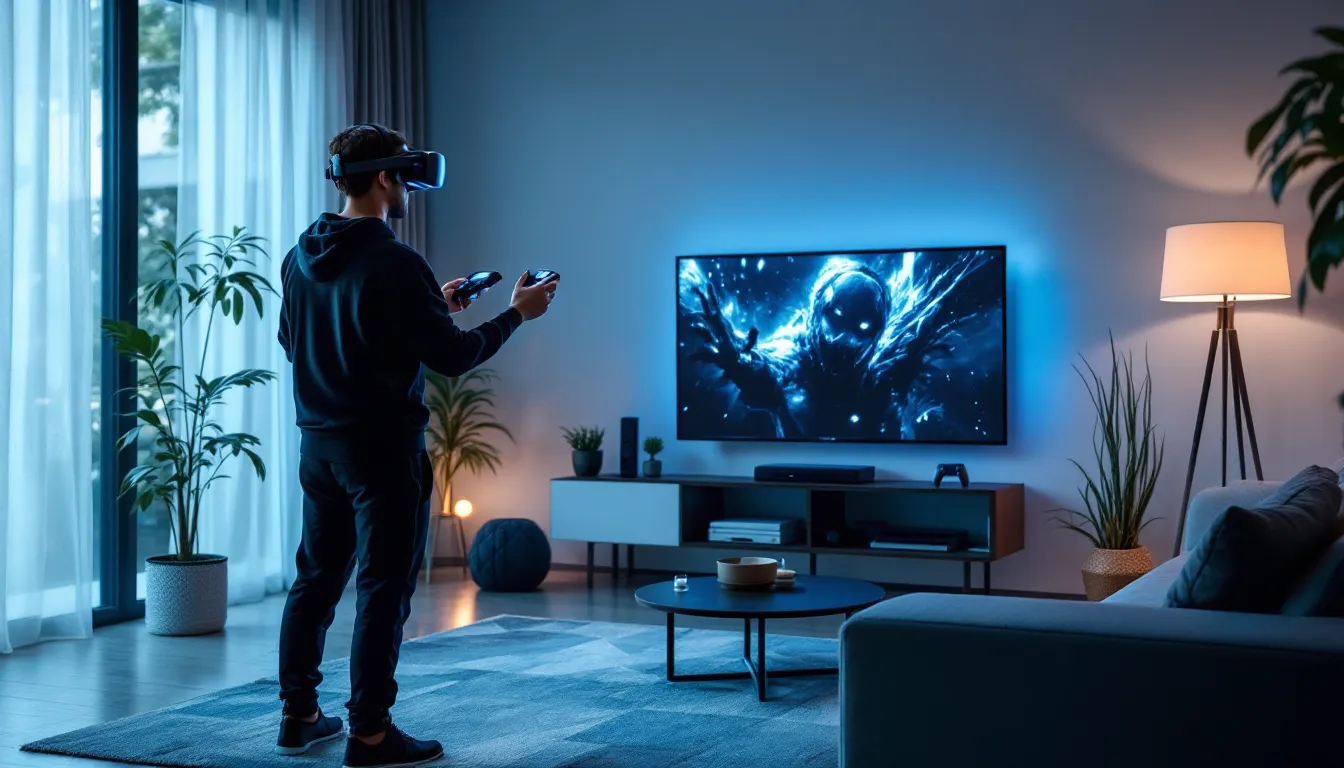
Horror games have always been about atmosphere, tension, and the creeping dread of what’s lurking around the next corner. But when you strap on an Oculus headset, that experience transforms into something visceral, something that makes your heart pound and your hands shake. VR horror isn’t just about watching scary things happen on a screen: it’s about being there, trapped in the nightmare with no escape except ripping the headset off your face.
In 2026, Oculus horror games have reached a new peak. With the Quest 3 pushing graphical fidelity and haptic feedback to new levels, developers are crafting experiences that blur the line between game and genuine terror. Whether you’re a seasoned horror veteran looking for your next scare or a newcomer curious about what VR horror offers, this guide covers everything you need to know about the most terrifying experiences available on Oculus platforms.
Key Takeaways
- VR shatters the psychological barrier of traditional gaming by creating complete presence and immersion, causing Oculus horror games to trigger genuine physiological fear responses rather than simple startled reactions.
- Top Oculus horror games in 2026 range from survival horror like Resident Evil 4 VR and Saints & Sinners to atmospheric experiences like Phasmophobia and Alien: Rogue Incursion, each delivering distinct fear mechanics suited to different player preferences.
- Quest 3 significantly outperforms Quest 2 for horror with superior graphics, improved haptic feedback, and better performance stability, making immersion more intense during frightening encounters.
- Co-op multiplayer horror games like Phasmophobia create emergent moments of shared terror that strengthen communities while balancing genuine scares with dark humor among teammates.
- Proper setup—including adequate play space, quality audio equipment, and awareness of motion sickness triggers—is essential to maximize Oculus horror immersion while maintaining safety and comfort.
Why VR Horror on Oculus Is More Terrifying Than Traditional Gaming
The jump from flat-screen horror to VR isn’t incremental, it’s exponential. When you’re playing a traditional horror game, you maintain a psychological barrier. The monitor is a window into another world, and no matter how scary things get, you’re still sitting safely in your chair. VR shatters that barrier completely.
The Immersion Factor: Presence and Psychological Horror
Presence is the VR industry’s term for the sensation of actually being in a virtual space, and it’s what makes VR horror so effective. Your brain struggles to distinguish between the virtual environment and reality when every direction you look reveals more of the nightmare. There’s no UI to ground you, no visible edges of a screen, just you and whatever’s hunting you in the dark.
This creates a level of psychological horror that flat games can’t replicate. When a creature breathes down your neck in VR, your lizard brain reacts as if the threat is real. Your heart rate spikes, adrenaline floods your system, and the fight-or-flight response kicks in. Studies on VR immersion have documented these physiological responses, confirming what players already know: VR horror triggers genuine fear responses, not just startled reactions.
The spatial audio on Oculus headsets amplifies this effect. When you hear footsteps approaching from behind in stereo surround sound, you instinctively turn your head to locate the threat. That simple act of looking over your shoulder in VR creates a vulnerability that doesn’t exist in traditional gaming. You’re not moving a camera, you’re exposing yourself.
How Oculus Controllers Enhance the Fear Experience
Oculus Touch controllers add another layer to the terror by making you physically interact with the horror. Instead of pressing a button to open a door, you reach out, grab the handle, and slowly push it open with your own hand. That deliberate physical action builds tension in a way that button prompts never could.
The haptic feedback in Quest 3 controllers takes this further. When you fire a gun, you feel the recoil. When something grabs your wrist, the controller vibrates with an unsettling intensity. When you’re desperately reloading a weapon with shaking hands while something charges at you, the tactile feedback grounds the experience in a way that makes your panic feel earned, not scripted.
Hand tracking on newer Oculus models adds even more immersion to certain titles. Seeing your actual hands in VR, free of controllers, creates an uncanny connection to the virtual space. When those hands start shaking because you’re genuinely terrified, the line between player and character dissolves entirely.
Top Oculus Horror Games You Must Play in 2026
The Oculus library has grown substantially, but these titles represent the peak of VR horror design. Each offers something different, from pure survival tension to supernatural dread.
Resident Evil 4 VR: Survival Horror Perfected
Resident Evil 4 VR remains the gold standard for translating classic survival horror into VR. Originally released for Quest 2 in 2021 and enhanced for Quest 3 in late 2024, this remake transforms Capcom’s action-horror masterpiece into something far more intimate and terrifying.
The VR adaptation changes everything. Manually reloading weapons while a Ganados rushes you creates panic that the original’s quick-time events only hinted at. Aiming down sights with actual hand movements makes every shot feel consequential. The village siege, already intense in the original, becomes absolutely harrowing when you’re physically ducking behind cover and blind-firing around corners.
Quest 3’s improved rendering brings the grotesque enemy designs to life with disturbing clarity. When a Regenerator’s labored breathing fills your ears and you can see every pulsing parasite under its skin, the horror hits different than it did on a TV screen twenty years ago.
The Walking Dead: Saints & Sinners – Post-Apocalyptic Terror
Skydance Interactive’s Saints & Sinners series (with Chapter 2: Retribution receiving its final content update in early 2025) offers the most comprehensive VR horror experience available. Set in a flooded New Orleans overrun by walkers, the game balances combat, resource management, and exploration in ways that keep tension constant.
What sets Saints & Sinners apart is its physics-based combat system. Stabbing a walker in the skull requires actual force and precision, you can’t just wave your hand vaguely at enemies. When you’re surrounded and desperately swinging a machete while trying to retrieve it from a zombie’s ribcage, the panic is genuine. The stamina system means you’ll tire out, adding another layer of vulnerability.
The day-night cycle creates meaningful consequences. Push too far into a mission and darkness falls, bringing increased walker activity and reduced visibility. Many video game reviews have highlighted how this mechanic transforms exploration into a calculated risk every time.
Five Nights at Freddy’s: Help Wanted – Jump Scare Central
Scott Cawthon’s FNAF franchise made its VR debut with Help Wanted in 2019, receiving a major Quest 2/3 update in 2023, and it’s exactly as stressful as you’d imagine. If you’re looking for relentless jump scares and animatronic nightmares, this is your game.
The VR format intensifies FNAF’s core loop of monitoring cameras, managing limited resources, and trying not to have a heart attack when Foxy sprints down the hallway. Physically leaning forward to check the door lights, then frantically pulling up the camera tablet while listening for audio cues, it’s exhausting in the best way.
Help Wanted includes multiple mini-games and scenarios beyond the classic office defense, offering variety that keeps the scares fresh. The Prize Corner level, where you have to wind a music box while managing other tasks, is particularly cruel in VR.
Phasmophobia VR: Co-Op Ghost Hunting Nightmares
Phasmophobia bridged to Oculus Quest in 2024 (after years as a PC VR favorite), bringing its brand of cooperative ghost investigation to standalone VR. This is social horror at its finest, and most terrifying.
The gameplay loop involves entering haunted locations with up to three other players, using EMF readers, spirit boxes, UV lights, and other ghost-hunting equipment to identify what type of entity is present. The brilliance is in the execution: ghosts respond to voice chat, so saying their name can provoke a hunt where the lights cut out and the ghost actively stalks players.
Nothing matches the horror of hearing your friend’s panicked screaming cut to silence over voice chat, then discovering their body crumpled in a hallway when the hunt ends. The randomized ghost behaviors and evidence types keep each investigation fresh, and the game’s difficulty modifiers can make experienced players genuinely afraid again.
Alien: Rogue Incursion – Sci-Fi Horror Reimagined
Released in late 2025 by Survios, Alien: Rogue Incursion is the Xenomorph VR game fans have been demanding since Alien: Isolation. Set between the first two films, it captures the franchise’s signature blend of sci-fi tech and primal horror.
The Xenomorph AI is genuinely unsettling. It stalks you through derelict space stations and colony facilities, learning from your behavior and adapting its hunting patterns. The motion tracker, physically held in your off-hand while you aim a pulse rifle with your dominant hand, creates agonizing moments where you have to choose between awareness and firepower.
Facehuggers are nightmare fuel in VR. When one launches at your face, you have split seconds to physically swat it away or shoot it mid-air. Miss, and you’ll frantically tear at your face as it latches on. The haptic feedback and visual effects during these encounters are deliberately overwhelming, creating genuine panic that most gaming industry coverage has praised for its intensity.
Hidden Gem Horror Titles for Oculus Quest
Beyond the blockbuster releases, the Quest store hides several exceptional horror experiences that deserve attention. These titles might lack marketing budgets, but they don’t lack scares.
Atmospheric Horror Games That Build Slow Dread
The Exorcist: Legion VR delivers episodic horror based on the classic film franchise. Each of its five chapters places you in different supernatural investigations as a detective, building psychological horror through environmental storytelling and unsettling atmosphere rather than constant jump scares. The VR adaptation handles possession sequences with disturbing creativity, watching objects levitate around you while demonic voices whisper from every direction creates profound unease.
Lies Beneath offers stylized comic-book visuals that shouldn’t work for horror but absolutely do. The cell-shaded art style creates an otherworldly aesthetic while the gameplay delivers solid creature combat and resource management. Set in a frozen Alaskan town filled with Lovecraftian monsters, it balances action and atmosphere effectively.
Cosmodread is a roguelike horror experience set aboard a procedurally generated space station. Each run is different, and the permadeath system raises stakes considerably. The game excels at creating isolation and vulnerability, you’re alone in the dark with limited resources and no guarantee of survival.
Indie Horror Experiences Worth Your Time
Face Your Fears 2 is Turtle Rock Studios’ love letter to horror anthologies. It offers multiple self-contained horror scenarios ranging from haunted hospitals to creature encounters, each with distinct mechanics and scare tactics. The production values punch well above its price point.
Affected: The Manor is pure atmospheric horror, no combat, no puzzles, just navigating a haunted estate while the environment actively tries to terrify you. It’s short but effective, perfect for introducing VR horror newcomers to the genre without overwhelming them.
Wraith: The Oblivion – Afterlife puts you in the role of a ghost investigating your own death. The premise allows for creative mechanics like phasing through walls and possessing objects. The mansion setting is gorgeously detailed on Quest 3, and the story delivers genuine emotional weight alongside its scares.
Different Types of Horror Experiences on Oculus
Not all horror games scare you the same way. Understanding the different approaches helps you find experiences that match your tolerance and preferences.
Survival Horror vs. Psychological Horror in VR
Survival horror in VR emphasizes resource management, combat, and immediate physical threats. Games like Resident Evil 4 VR and Saints & Sinners fall into this category. You’re given tools to fight back, but ammunition is scarce and enemies are dangerous. The fear comes from feeling underpowered and knowing that mistakes have consequences.
These games typically feature clearer fail states and more action-oriented gameplay. You die, you restart, you learn enemy patterns. The horror is acute but often less psychologically lingering.
Psychological horror focuses on atmosphere, dread, and mental unease rather than direct confrontation. Titles like Cosmodread and Wraith lean heavily into environmental storytelling, isolation, and the fear of the unknown. Combat is often minimal or absent entirely, you’re hiding, fleeing, or simply enduring.
VR amplifies psychological horror’s effectiveness because presence makes subtle environmental details more noticeable. A flickering light or distant sound carries more weight when you’re genuinely inside the space experiencing it.
Jump Scare Horror vs. Atmospheric Dread
Jump scare horror delivers exactly what the name suggests, sudden, loud, shocking moments designed to provoke immediate fear responses. Five Nights at Freddy’s: Help Wanted is the poster child for this approach in VR. These games are exhausting but undeniably effective at triggering adrenaline spikes.
The trade-off is that jump scares lose effectiveness through repetition. Once you know Foxy is coming down the hallway, the scare becomes more about tension than surprise.
Atmospheric dread builds slowly, creating sustained unease rather than sharp shocks. Alien: Rogue Incursion excels here, the Xenomorph might not appear for minutes, but knowing it’s hunting you keeps your heart rate elevated the entire time. This approach creates longer-lasting psychological impact but requires more patience from players.
The best VR horror games blend both approaches. Sustained atmospheric tension punctuated by well-timed jump scares creates a rhythm that keeps players off-balance.
Action Horror: Fighting Back Against the Terror
Action horror gives players powerful tools and encourages confrontation. Arizona Sunshine 2 (released in December 2023 for Quest 2/3) exemplifies this category, you’re mowing down zombie hordes with a growing arsenal of weapons.
These games reduce vulnerability through firepower but maintain horror through overwhelming odds or particularly dangerous enemy types. The gore and visceral combat keep the horror aesthetic while making players feel less helpless than pure survival horror.
Action horror works well as an entry point for VR horror newcomers. Having a shotgun in your hands makes the experience less psychologically intense while still delivering scares and atmosphere.
Essential Tips for Playing Oculus Horror Games
VR horror presents unique challenges beyond the scares themselves. These practical tips will help you maximize enjoyment while minimizing discomfort.
Managing Motion Sickness in Intense Horror Scenarios
Motion sickness (or VR sickness) happens when your visual input doesn’t match your inner ear’s sense of movement. Horror games often exacerbate this through quick turns, frantic movement, and deliberately disorienting effects.
Here’s how to minimize it:
- Start with comfort settings enabled. Most VR horror games offer vignetting (darkening peripheral vision during movement), snap turning instead of smooth turning, and teleport movement options. Use them initially, then gradually transition to more immersive settings as your VR legs develop.
- Take breaks frequently. The adrenaline from horror games can mask motion sickness symptoms until they suddenly hit hard. Every 20-30 minutes, remove the headset for 5-10 minutes.
- Focus on fixed points during intense moments. When things get chaotic, looking at a static object in the environment helps reorient your brain.
- Use a fan. Physical airflow on your face provides a real-world sensory anchor and helps prevent overheating, which worsens nausea.
- Ginger supplements or motion sickness medication. Some players swear by these, though effectiveness varies individually.
If you start feeling nauseous, stop immediately. Pushing through motion sickness can create negative associations that make future VR sessions harder.
Setting Up Your Play Space for Maximum Safety and Immersion
Horror games make you forget you’re in your living room, which creates safety hazards. Proper setup prevents injuries and broken controllers.
Physical space considerations:
- Clear at least a 6.5 x 6.5 feet area if possible. Horror games provoke sudden movements and frantic spinning.
- Remove low-hanging lights, ceiling fans, and wall decorations from the play space.
- Use a rug or mat to define your safe area tactilely. You’ll feel when you step off it.
- Play seated for more intense horror games. You reduce collision risks while maintaining immersion.
Guardian boundaries:
- Set your Quest guardian boundary conservatively. Better to see it occasionally than punch a wall.
- Enable Guardian sensitivity to maximum for horror games. The last thing you need is a ghost chase scene interrupted by a broken TV.
Lighting:
- Play in dim lighting, not complete darkness. The Quest’s tracking cameras need some ambient light to function properly.
- Avoid bright lights or windows directly in the play space, they can interfere with tracking and break immersion.
Audio Setup: Why Sound Design Matters in VR Horror
Sound design is 50% of VR horror’s effectiveness. The Quest 3’s built-in speakers are decent, but upgrading your audio transforms the experience.
Best audio options:
- High-quality headphones or earbuds (with 3.5mm jack). Complete isolation from real-world sounds maximizes immersion. Closed-back over-ear headphones with good bass response make everything feel more present.
- Quest 3’s official audio strap provides improved directionality over standard speakers without the hassle of separate headphones.
- Avoid the built-in Quest 2 speakers for horror. They’re adequate for casual games but leak too much audio and lack the punch horror soundtracks need.
Spatial audio cues are critical in games like Phasmophobia and Alien: Rogue Incursion, where locating sounds precisely can mean the difference between survival and death. Hearing a Xenomorph’s movements in the vents above you creates an entirely different threat response than just hearing generic scary sounds.
Oculus Quest 2 vs. Quest 3: Which Is Better for Horror Gaming?
Both headsets deliver excellent VR horror experiences, but the Quest 3’s improvements are meaningful for the genre. Whether they’re worth the upgrade depends on your current setup and budget.
Graphics and Performance Differences in Horror Titles
The Quest 3 features a significantly more powerful Snapdragon XR2 Gen 2 processor and 8GB RAM (compared to Quest 2’s XR2 Gen 1 and 6GB RAM). For horror games, this translates to:
- Higher resolution textures that make grotesque enemy details more disturbing and environmental storytelling clearer
- Better lighting and shadow quality, which is critical for atmosphere in horror games
- More stable frame rates during intense scenes with multiple enemies or complex effects
- Increased draw distance, meaning less pop-in that can break immersion during exploration
Resident Evil 4 VR received a Quest 3 enhancement patch that adds improved texture resolution, better shadow rendering, and subtle lighting improvements. The differences aren’t revolutionary, but they’re noticeable, especially in darker areas where improved contrast helps you spot details.
Alien: Rogue Incursion was built with Quest 3 as the lead platform and looks noticeably rougher on Quest 2. The Xenomorph’s animations and AI behaviors are identical, but the atmospheric lighting that creates so much dread is significantly downgraded on the older hardware.
That said, Quest 2 remains fully capable of delivering terrifying experiences. Saints & Sinners, Phasmophobia, and FNAF: Help Wanted run excellently on Quest 2 with minimal compromises.
Controller Haptics and Immersion Upgrades
Quest 3’s Touch Plus controllers feature improved haptic actuators that provide more nuanced feedback. In horror contexts, this means:
- More varied weapon feedback (different recoil patterns for each gun)
- Subtler environmental haptics (feeling the texture of walls as you trail your hand along them in the dark)
- More unsettling creature contact feedback (distinct vibrations for different enemy types grabbing you)
The Quest 3’s TruTouch haptics system also enables developers to create layered haptic effects that the Quest 2’s motors can’t replicate. Some newer horror titles use this for things like feeling your character’s racing heartbeat through the controllers during chase sequences.
The Quest 3 controllers are also slightly more ergonomic and have eliminated the tracking rings, reducing the chance you’ll smack them together during frantic movements, a common occurrence when panic-reloading weapons while backpedaling from enemies.
Verdict: If you’re buying your first headset specifically for horror games in 2026, get the Quest 3. If you already own a Quest 2, it’s still excellent for VR horror and doesn’t demand an immediate upgrade unless you’re particularly sensitive to visual fidelity.
Upcoming Oculus Horror Games to Watch in 2026 and Beyond
The VR horror pipeline is robust heading into late 2026 and 2027. Several high-profile projects could redefine what’s possible in the genre.
Behemoth from Skydance Interactive (the Saints & Sinners developers) is scheduled for Q3 2026. Early previews suggest a dark fantasy horror experience with massive-scale boss fights and the studio’s signature physics-based combat. The verticality and sense of scale in the trailers look genuinely impressive.
Silent Hill: The Short Message VR was quietly confirmed by Konami in February 2026 for a holiday release window. Details remain scarce, but the prospect of Silent Hill’s psychological horror in VR has the community cautiously optimistic after years of franchise dormancy.
Metro Awakening from Vertigo Games brings the post-apocalyptic horror of the Metro series to VR. Set before the events of Metro 2033, it promises the claustrophobic tunnel exploration and mutant encounters the franchise is known for. Expected in late 2026 for Quest 3 and PSVR2 with cross-play support.
Vampire: The Masquerade – Bloodlines VR is in development at Fast Travel Games, adapting the World of Darkness universe for VR. The blend of gothic horror and vampire politics could translate wonderfully to VR’s intimate perspective, though the release date remains vague (“2027” is the official window).
Indie developers continue pushing boundaries too. Into the Radius 2 entered early access in March 2026, expanding the original’s stalker-inspired survival horror with improved systems and more terrifying anomalies. Propagation: Paradise Hotel promises wave-based zombie survival with an emphasis on co-op defense mechanics.
Several developers showcased horror projects at the Game Developers Conference in March 2026, though most remain unannounced officially. Industry insiders suggest at least two AAA horror franchises are exploring VR adaptations, with announcements expected at major gaming showcases throughout the year.
Multiplayer Horror: The Rise of Social VR Scares
Playing horror games alone is terrifying. Playing them with friends introduces an entirely different dynamic, one where shared fear somehow makes everything both better and worse.
Phasmophobia proved that co-op horror in VR creates emergent comedy and terror in equal measure. The shared experience of investigating haunted locations, the dark humor that develops between friends trying to cope with fear, and the genuine panic when someone gets hunted creates memorable gaming moments that solo horror rarely matches.
The social aspect changes how fear works psychologically. You feel braver with teammates nearby, but their presence also means you have an audience for your failures. Nobody wants to be the person who panicked and ran, leaving their friends to die, but it happens constantly, and those stories become legendary in your gaming group.
The Forest VR and Saints & Sinners both support co-op, allowing friends to experience their survival horror scenarios together. The resource sharing and tactical coordination add strategic depth while maintaining horror tension.
Asymmetric multiplayer horror is also emerging. Games where one player controls the monster while others play survivors create intense psychological warfare. VR The Diner Duo pioneered this format for VR, and horror developers are adapting the concept. The upcoming Dead Realm VR promises exactly this experience, spectral hunters versus human survivors in elaborate hide-and-seek matches across haunted environments.
Many VR horror fans have found that experiences showcased across major gaming culture platforms prove that shared terror strengthens gaming communities in unexpected ways. Discord servers dedicated to VR horror games are thriving, with players organizing regular game nights and sharing their most terrifying moments.
The challenge for developers is balancing horror intensity with social play. Too much chaos and the fear dissipates into comedy. Too oppressive and players burn out quickly. The best multiplayer VR horror maintains that knife-edge balance where you’re laughing one moment and genuinely afraid the next.
Conclusion
VR horror has matured into something truly special, experiences that push gaming’s boundaries while delivering genuine fear that flat-screen games can’t match. The Oculus Quest platform, particularly the Quest 3, has made these experiences more accessible without compromising on quality.
Whether you’re drawn to the action-oriented survival horror of Resident Evil 4 VR, the cooperative ghost hunting of Phasmophobia, or the atmospheric dread of indie gems, there’s a VR horror experience that will test your courage. The technology has reached a point where immersion is complete enough to trick your brain into genuine fear responses, and developers are leveraging that power with increasingly sophisticated design.
The genre’s future looks bright, or more accurately, delightfully dark. With major franchises embracing VR and indie developers continuing to innovate, horror fans have more reasons than ever to strap on a headset and face their fears. Just remember to clear your play space first, take breaks when needed, and maybe keep the lights on. Your heart rate will thank you.